
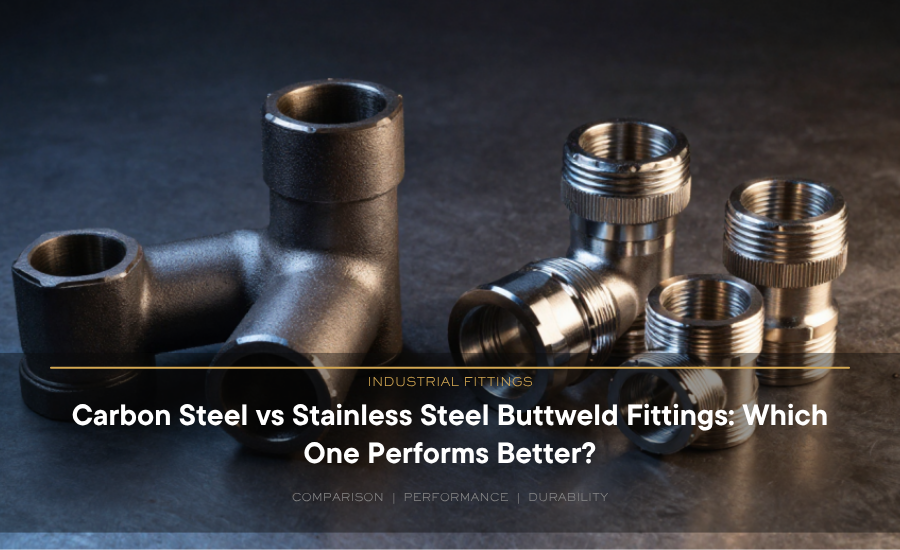
Choosing the right material for industrial piping systems is one of the most important decisions for engineers, contractors, and project managers. Among the most widely used options in industrial applications are Carbon Steel Buttweld Fittings and Stainless Steel Buttweld Fittings. Both materials offer unique advantages, but selecting the better option depends on factors such as operating conditions, corrosion resistance, temperature, pressure, and budget.
Understanding the differences between these two materials can help industries improve performance, reduce maintenance costs, and extend the lifespan of piping systems.
Understanding Carbon Steel Buttweld Fittings
Carbon steel fittings are manufactured primarily using iron and carbon. They are known for their excellent strength, durability, and affordability, making them a popular choice in industries such as oil & gas, construction, power generation, and water treatment.
One of the biggest advantages of carbon steel is its high mechanical strength. These fittings can withstand high pressure and heavy loads, making them suitable for demanding industrial environments.
Carbon steel fittings are also cost-effective compared to stainless steel, which makes them ideal for large-scale industrial projects where budget plays a major role.
Advantages of Carbon Steel Buttweld Fittings
- High tensile strength and durability
- Excellent performance in high-pressure applications
- Lower cost compared to stainless steel
- Easy availability for large industrial projects
- Suitable for structural and heavy-duty applications
Limitations of Carbon Steel
Despite its strength, carbon steel is more vulnerable to corrosion and rust, especially in humid or chemical-rich environments. To improve durability, protective coatings or surface treatments are often required.
Understanding Stainless Steel Buttweld Fittings
Stainless steel fittings contain chromium, which creates a protective oxide layer that resists corrosion and oxidation. These fittings are widely used in industries where cleanliness, corrosion resistance, and long service life are critical.
Industries such as pharmaceuticals, food processing, marine engineering, petrochemicals, and chemical processing heavily rely on stainless steel piping systems due to their superior resistance to rust and chemical reactions.
Stainless steel fittings are also highly resistant to extreme temperatures, making them suitable for both high-heat and cryogenic applications.
Advantages of Stainless Steel Buttweld Fittings
- Excellent corrosion and rust resistance
- Longer lifespan with minimal maintenance
- Hygienic and easy to clean
- Attractive surface finish and appearance
- Performs well in extreme temperatures
- Suitable for aggressive chemical environments
Limitations of Stainless Steel
The primary drawback of stainless steel fittings is their higher cost. Initial investment is usually greater compared to carbon steel, although long-term maintenance savings often compensate for the price difference.
Which One Performs Better?
The answer depends entirely on the application and operating environment.
Choose Carbon Steel Buttweld Fittings If:
- The project requires high strength at a lower cost
- The operating environment is less corrosive
- The application involves high pressure and structural support
- Budget optimization is a priority
Choose Stainless Steel Buttweld Fittings If:
- Corrosion resistance is critical
- The system handles chemicals, moisture, or saltwater
- Hygiene and cleanliness are important
- Long-term durability with low maintenance is required
Cost vs Long-Term Value
Many industries initially choose carbon steel because of its affordability. However, in corrosive environments, maintenance and replacement costs can increase significantly over time.
Stainless steel may require a higher upfront investment, but its longer lifespan, lower maintenance requirements, and better corrosion resistance often make it more economical in the long run.
Final Thoughts
Both carbon steel and stainless steel buttweld fittings offer excellent performance when used in the right applications. Carbon steel provides outstanding strength and cost efficiency, while stainless steel delivers superior corrosion resistance and long-term reliability.
Before selecting the material, industries should carefully evaluate operating conditions, environmental exposure, maintenance expectations, and project budget. Choosing the right buttweld fitting material can greatly improve pipeline efficiency, operational safety, and overall system performance.