
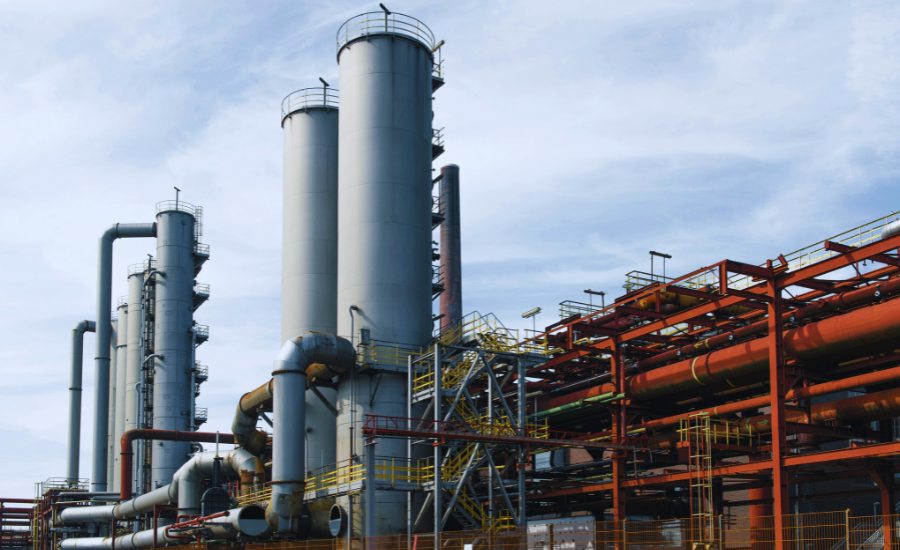
Chemical processing plants operate in an environment where safety, precision, corrosion resistance, and reliability are non-negotiable. Piping systems in these facilities may transport acids, solvents, gases, steam, chemicals, and other aggressive or hazardous substances—often under high pressure and extreme temperatures.
In such demanding conditions, the choice of piping components can directly influence plant efficiency and safety. This is where buttweld fittings have become a preferred solution for many industrial piping applications.
Unlike threaded or socket-weld connections, buttweld fittings are welded directly to the pipe, creating a strong and continuous connection. But what makes them particularly suitable for chemical processing plants?
1. A Stronger, More Continuous Pipeline Connection
Chemical plants often have complex piping networks with numerous elbows, tees, reducers, and other directional components. Every connection represents a potential weak point.
Buttweld fittings create a welded joint between the fitting and pipe, resulting in a smooth and continuous piping system. When properly installed and welded, these connections can provide excellent mechanical strength and help withstand demanding operating conditions.
This is particularly valuable in systems exposed to pressure fluctuations, vibration, thermal expansion, and continuous operation.
2. Excellent Resistance to Leakage
Leak prevention is one of the biggest priorities in chemical processing.
A leaking pipeline can result in product loss, equipment damage, environmental contamination, or serious safety hazards. Buttweld fittings eliminate the need for threaded connections and associated sealing materials at the joint.
A properly executed butt weld can provide a highly reliable, leak-resistant connection. This makes these fittings especially useful where the transported medium is hazardous, volatile, corrosive, or expensive.
3. Suitable for High-Pressure Applications
Many chemical processes involve elevated operating pressures. Piping components must therefore be capable of handling the mechanical stresses generated by the process.
Buttweld fittings offer strong welded connections and are available in a wide range of sizes, wall thicknesses, materials, and pressure classes to suit different applications.
When the fitting, pipe material, wall thickness, and welding procedure are correctly selected, the resulting piping assembly can deliver dependable performance under demanding pressure conditions.
4. Better Flow Characteristics
The internal geometry of a piping system matters just as much as its external strength.
Buttweld fittings can provide relatively smooth internal transitions compared with certain mechanical connection methods. Properly selected elbows, reducers, and tees can help maintain efficient flow while reducing unnecessary turbulence and pressure losses.
This can be particularly important in chemical processing systems where precise flow rates and controlled process conditions influence production efficiency and product quality.
5. Reduced Crevices and Contamination Points
Chemical processing systems often need to maintain high levels of cleanliness. Crevices, gaps, and irregular internal surfaces can create areas where chemicals, residues, or contaminants accumulate.
Because buttweld fittings form welded connections without internal threads, they can help create a cleaner piping configuration. This characteristic is useful in processes where contamination control, cleaning, or product purity is important.
A well-designed welded system can also simplify cleaning and inspection compared with piping arrangements containing numerous threaded connections.
6. Excellent Performance Across Temperature Changes
Chemical plants frequently deal with hot and cold process fluids. Steam, heated chemicals, cryogenic substances, and rapid temperature changes can place considerable stress on piping systems.
Buttweld fittings, when manufactured from appropriate materials and correctly welded, can accommodate demanding temperature conditions. Material selection remains critical, however, because different alloys offer different levels of resistance to heat, thermal cycling, and chemical exposure.
The fitting should always be selected according to the actual operating temperature and process environment.
7. Wide Material Selection
Not every chemical environment is the same. A fitting suitable for one process may be completely inappropriate for another.
Buttweld fittings are available in materials such as carbon steel, stainless steel, alloy steel, and other specialised alloys. This allows engineers to select components based on factors including:
- Chemical compatibility
- Operating temperature
- Pressure requirements
- Corrosion resistance
- Mechanical strength
- Expected service life
For highly corrosive processes, selecting the correct material grade is especially important. The fitting should be compatible with both the process medium and the surrounding operating conditions.
8. Ideal for Complex Piping Layouts
Chemical processing plants rarely have simple, straight pipelines. Space restrictions and process requirements can demand intricate routing around tanks, reactors, heat exchangers, pumps, and other equipment.
Buttweld fittings are available in various configurations, including:
This variety gives engineers greater flexibility when designing complex piping networks while maintaining a consistent welded connection system.
9. Long-Term Reliability Can Lower Lifecycle Costs
The initial purchase price is only one part of the cost of an industrial piping system.
Frequent leaks, maintenance requirements, corrosion-related failures, and unplanned shutdowns can quickly increase operating expenses. High-quality buttweld fittings, combined with appropriate material selection and professional installation, can help reduce the frequency of such problems.
For chemical plants operating continuously, improved reliability can translate into fewer interruptions and better overall lifecycle economics.
Quality and Installation Matter
The benefits of buttweld fittings depend heavily on manufacturing quality, material selection, welding procedures, and installation standards.
Before purchasing fittings for a chemical processing application, buyers should consider material certificates, dimensional accuracy, applicable standards, testing requirements, pressure and temperature ratings, and supplier quality controls.
Equally important is ensuring that welding is performed by qualified personnel using appropriate procedures and inspection methods.
The Right Fitting for the Right Chemical Process
Buttweld fittings are not simply connecting components. They are an integral part of a chemical plant’s piping infrastructure, where reliability and safety can have a direct impact on operations.
Their strong welded connections, leak-resistant design, smooth flow characteristics, material versatility, and suitability for demanding pressure and temperature conditions make them a practical choice for many chemical processing applications.
However, there is no universal fitting for every process. The right combination of fitting type, material, dimensions, wall thickness, welding procedure, and quality assurance is what ultimately creates a reliable piping system.
For chemical processing plants, choosing high-quality buttweld fittings is therefore less about selecting a component—and more about building a piping network designed to perform safely and consistently for years to come.